DCF Trends Summit: AI Compresses the Data Center Hardware Lifecycle and Raises the Stakes for ITAD
Key Highlights
- AI hardware's increasing density and specialization challenge traditional IT asset disposition, requiring new handling procedures and specialized rigging.
- Shorter refresh cycles of 18-24 months reduce hardware depreciation, making timely decommissioning critical for maximizing asset value.
- Early planning and integrated workflows are essential to manage security, compliance, and asset tracking, reducing risks during hardware disposition.
- Reducing vendor handoffs and maintaining chain of custody enhances security and transparency in the decommissioning process.
- Finding the 'next best life' for hardware through testing, grading, and configuration can significantly increase recovery value, sometimes by 40%.
The AI infrastructure race is largely a story about getting more computing into data centers faster. But the accelerated hardware cycle is creating an equally consequential problem at the other end of the rack: getting yesterday’s equipment back out while it is still valuable.
GPU systems built around increasingly dense and specialized AI architectures are beginning to challenge traditional assumptions about IT asset disposition, or ITAD. Where conventional enterprise infrastructure might remain in service for three to five years, newer GPU platforms can face refresh cycles of 18 to 24 months, according to Josh Humm, Data Center Solutions Manager at Dynamic Lifecycle Innovations.
That compression changes the economics as well as the mechanics of decommissioning. “The faster we can get the materials out of your building, the more it’s worth, the more we can return to your program,” Humm said.
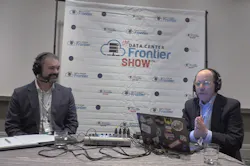
Humm joined DCF Contributing Editor Doug Black for a DCF Show podcast recorded at the third annual Data Center Frontier Trends Summit, held Aug. 4-6 in Reston, Virginia. Their conversation focused on a less visible part of the AI infrastructure buildout: what happens to servers, accelerators, memory, storage and networking gear when the next generation arrives.
The answer increasingly touches facility operations, data security, logistics, sustainability and potentially millions of dollars in recoverable hardware value.
AI Hardware Changes the Exit Path
AI systems create some obvious physical challenges for decommissioning.
Traditional ITAD teams accustomed to pulling 1U and 2U servers out of air-cooled racks may instead encounter liquid-cooling manifolds, substantially heavier systems and equipment requiring specialized rigging and handling procedures.
Humm said some systems can weigh between 5,000 and 6,000 pounds. “We’re not pulling out just 1U, 2U servers out of racks anymore,” he said.
Liquid cooling adds another layer. Removing infrastructure designed around direct-to-chip or other liquid-cooling architectures can require equipment and procedures well beyond conventional hot-aisle/cold-aisle server environments.
But Humm pointed to another complication that may prove equally significant: increasingly proprietary hardware.
AI systems can be highly optimized around particular workloads, networks and accelerator architectures. That reduces some of the commoditized repeatability on which traditional ITAD processes have relied and puts more emphasis on engineering, testing and component-level evaluation.
Then comes speed. “The traditional ITAD refresh structure for working with an enterprise client is three to five years on a refresh,” Humm said. “A lot of this new GPU and a lot of new equipment, we’re talking 18 to 24 months.”
Those shortened cycles mean decommissioned hardware cannot simply sit in a staging area waiting for somebody to decide what happens next.
Processors, memory, networking equipment and other components continue to depreciate after they are removed from production. In markets where certain components remain in short supply, that delay can represent a measurable loss of recoverable value.
“The longer you sit on it, the more it depreciates,” Humm said. “It’s a detriment to your program to sit and wait.”
Plan the Exit Before the Hardware Arrives
That dynamic is pushing ITAD toward a larger role in data center lifecycle planning.
Operators devote enormous resources to determining how equipment will enter a facility: power requirements, rack density, cooling architecture, network connectivity, commissioning and deployment schedules.
Humm argues that the process for removing that infrastructure eventually deserves earlier consideration as well.
“We shouldn’t be a reactive thing that happens at the point of disposition at the end of life,” he said.
For large enterprises, simply onboarding a new ITAD provider can take months as security, compliance, environmental and operational requirements are reviewed.
Waiting until a refresh is underway creates a mismatch between that process and the increasingly rapid hardware cycles of AI infrastructure.
Humm recommends designing decommissioning workflows into facility operations, including the tracking systems needed to maintain relationships between equipment and its components. A server and the drives removed from it, for example, need to remain linked through the disposition process so operators can establish what happened to each data-bearing asset.
The aim is to create a predetermined path from removal through data sanitization or destruction, testing, remarketing and, where necessary, recycling.
The principle sounds familiar because the industry is confronting a similar issue on the construction side: infrastructure velocity increasingly rewards decisions made earlier.
ITAD now has its own version of that equation.
Every Handoff Adds Risk
Data security makes the disposition process more consequential than ordinary equipment logistics.
A retired server may move from the data hall to an onsite decommissioning contractor, then to a transportation provider, processor, refurbisher, remarketer and ultimately a recycler.
Humm identifies those vendor handoffs as some of the principal exposure points. The ITAD industry can be highly segmented, he said, with separate companies responsible for onsite services, transportation, processing and recycling.
Dynamic’s model, by contrast, is vertically integrated. The company says it uses its own project managers and technicians, operates its own logistics capabilities, processes and refurbishes equipment and operates electronics recycling infrastructure.
Humm said its technicians can perform data erasure down to the chip level on certain network equipment before assets are evaluated for reuse or recycling.
For operators, however, the broader lesson extends beyond any particular ITAD provider: reducing handoffs can simplify the chain of custody, while every additional partner needs to be understood and documented.
Certification provides one way to scrutinize that chain. Dynamic publicly lists R2v3, e-Stewards, ISO 14001 and NAID AAA among its certifications and practices. NAID AAA, administered by i-SIGMA, uses scheduled and unannounced audits to validate secure information-destruction practices.
Humm said operators should also demand transparency into downstream providers rather than relying on general sustainability or security claims.
Finding the Hardware’s “Next Best Life”
Once data is secured, another question begins: What is the equipment actually worth? The answer can be more complicated than checking what a used server appears to sell for online.
Dynamic describes its approach as finding an asset’s “next best life.” That could mean selling a system intact, reconfiguring it, harvesting valuable components or sending equipment with no viable reuse value into certified recycling streams.
Humm said grading and configuration can materially change the economics. Memory might have substantially greater value outside a chassis headed for recycling. Components can also become more valuable when sufficient quantities are accumulated to satisfy demand for a particular configuration.
Under some circumstances, Humm said those decisions can produce improvements of 10%, 20%, 30% or even 40% in recovered value. Those figures should be understood as outcomes Dynamic says it has seen in particular disposition scenarios, rather than a universal benchmark for retired hardware.
The process requires testing as well. Equipment being returned to the secondary market has to be evaluated as working hardware, which can mean testing processors, memory and other components rather than simply identifying them by part number.
Humm cautioned against relying heavily on automated market valuations, saying AI-based estimates can produce “pie-in-the-sky overvaluation” that fails to reflect actual equipment condition and grading.
Instead, he said customers should expect a detailed breakout showing what happened to their assets and where their recovery came from: whole-system resale, chassis, memory, processors, storage, other components or recycling.
That level of transparency becomes particularly important as shortages and long lead times strengthen parts of the secondary infrastructure market.
Humm said Dynamic has even seen customers accelerate planned equipment refreshes after determining that unusually strong component pricing could offset more of the cost of replacing the hardware.
That introduces an interesting new variable into the AI infrastructure lifecycle. Refresh cadence is usually viewed as something technology suppliers impose on data center operators. But strong residual values can occasionally give operators an economic reason to move faster as well.
A $17 Million Data Center Decommissioning
The potential scale of those economics emerged in a recent Dynamic project in Colorado. Humm said an existing enterprise customer was migrating from an approximately 8- to 10-MW on-premises data center into cloud infrastructure.
Dynamic had previously handled more conventional endpoint ITAD work for the company. This time, the project encompassed the data center. Over approximately three months, Humm said Dynamic removed equipment, cabinets, racks and other infrastructure from the facility while meeting the customer’s schedule.
Data-bearing equipment received additional treatment onsite. Hard drives were wiped at the facility, while drives that could not be successfully sanitized were shredded there.
Humm said onsite destruction can be especially valuable when an operator wants the strongest possible assurance that sensitive storage media never leaves its control before sanitization or destruction.
When the Colorado project was completed, the recovered value changed the economics dramatically. Dynamic returned more than $17 million net to the customer, Humm said — approximately $15 million more than the customer had expected.
For an operations organization accustomed to treating decommissioning primarily as a cost, that kind of recovery gets attention.
“Being able to show your leadership a check for $17 million is something that makes you look good,” Humm said. It also illustrates why the retirement side of the hardware lifecycle deserves more scrutiny as AI investment accelerates.
Decommissioning remains an operational expense. But when equipment contains processors, memory and other components with significant secondary-market demand, disposition can also become a source of capital for the next infrastructure cycle.
Measuring the Sustainability Side
Reuse also intersects with the data center industry’s sustainability objectives.
Keeping functional hardware or components in service can avoid some of the environmental impact associated with manufacturing replacement equipment, while responsible material recovery provides an alternative for assets that cannot economically be reused.
Humm said Dynamic provides customers with sustainability reporting intended to translate those outcomes into more tangible terms.
For every 100,000 pounds of electronics processed, he cited company calculations equating the impact to metrics such as powering approximately 150 homes for a year, planting 12,000 trees or saving about 60 swimming pools worth of water.
Those numbers are Dynamic’s sustainability-reporting equivalents rather than industry-wide conversion factors, but they illustrate the growing demand for something more concrete than simply declaring old equipment “recycled.”
For data center operators, downstream visibility is increasingly part of that expectation.
A disposition program needs to show where equipment went, what was reused, what was destroyed and how remaining materials moved through recycling channels.
Trust — and Scale
Black closed the conversation by asking Humm for one question every operator should ask before its next major refresh.
Humm offered two. “Can I trust you? And can you scale with me?”
The first covers security, compliance and accountability.
Operators should understand the certifications applicable to their ITAD partner, how data destruction is documented, how assets are tracked and where equipment or recovered materials ultimately go.
“Nobody wants to be in the news for having their stuff show up somewhere where it shouldn’t be,” Humm said.
The second question may become increasingly important as AI infrastructure grows.
An ITAD operation sized to process enterprise laptops, desktops and mobile devices is very different from one capable of absorbing repeated truckloads of rack-scale infrastructure.
Operators should therefore look at processing turnaround, physical footprint, staffing, technical capabilities and the ability to handle simultaneous large projects.
Humm posed the issue in terms that will sound familiar to anybody planning AI capacity today: If a provider is asked to support a large-scale refresh two or three years from now, will it actually have the infrastructure to keep up?
That question is likely to get more urgent. The data center industry has spent the AI era learning how quickly assumptions about power, cooling, density and deployment schedules can change. Hardware lifecycle planning may be next.
If GPU infrastructure increasingly turns over in 18 to 24 months, the equipment entering today’s data halls is already moving toward tomorrow’s decommissioning queue.
The operators that plan that exit before the racks come offline will have a better chance of protecting the data, controlling the chain of custody — and capturing whatever value remains inside the hardware.
At Data Center Frontier, we talk the industry talk and walk the industry walk. In that spirit, DCF Staff members may occasionally use AI tools to assist with content.
Keep pace with the fast-moving world of data centers and cloud computing by connecting with Data Center Frontier on LinkedIn, following us on X/Twitter and Facebook, as well as on BlueSky, and signing up for our weekly newsletters using the form below.
About the Author
 Matt Vincent
Matt Vincent
Matt Vincent is Editor in Chief of Data Center Frontier, where he leads editorial strategy and coverage focused on the infrastructure powering cloud computing, artificial intelligence, and the digital economy. A veteran B2B technology journalist with more than two decades of experience, Vincent specializes in the intersection of data centers, power, cooling, and emerging AI-era infrastructure. Since assuming the EIC role in 2023, he has helped guide Data Center Frontier’s coverage of the industry’s transition into the gigawatt-scale AI era, with a focus on hyperscale development, behind-the-meter power strategies, liquid cooling architectures, and the evolving energy demands of high-density compute, while working closely with the Digital Infrastructure Group at Endeavor Business Media to expand the brand’s analytical and multimedia footprint. Vincent also hosts The Data Center Frontier Show podcast, where he interviews industry leaders across hyperscale, colocation, utilities, and the data center supply chain to examine the technologies and business models reshaping digital infrastructure. Since its inception he serves as Head of Content for the Data Center Frontier Trends Summit. Before becoming Editor in Chief, he served in multiple senior editorial roles across Endeavor Business Media’s digital infrastructure portfolio, with coverage spanning data centers and hyperscale infrastructure, structured cabling and networking, telecom and datacom, IP physical security, and wireless and Pro AV markets. He began his career in 2005 within PennWell’s Advanced Technology Division and later held senior editorial positions supporting brands such as Cabling Installation & Maintenance, Lightwave Online, Broadband Technology Report, and Smart Buildings Technology. Vincent is a frequent moderator, interviewer, and keynote speaker at industry events including the HPC Forum, where he delivers forward-looking analysis on how AI and high-performance computing are reshaping digital infrastructure. He graduated with honors from Indiana University Bloomington with a B.A. in English Literature and Creative Writing and lives in southern New Hampshire with his family, remaining an active musician in his spare time.